What Does an SEO Agency Do? Complete Guide for Business Owners
ByJames Price· Founder & CEO
11 min read
If you're reading this, you've realized your business needs better visibility in search results, but you're not quite sure what an SEO agency actually does or whether hiring one makes sense for your business. This guide breaks down exactly what SEO agencies deliver, how to evaluate their services, and how to choose the right partner for your specific business type and goals. If you want a practical vetting process, our guide on how to choose an SEO company walks through the questions, contract terms, and red flags to check before you sign.
An SEO agency gets your business in front of people who are searching for what you sell. In practice that is four kinds of work: technical fixes so Google can crawl and index your site, on-page work so each page targets a search people actually make, content that answers the questions buyers ask, and authority building through links, reviews and your Google Business Profile. A good agency reports the result in calls and quote requests, not in traffic.

An SEO agency helps your business show up when potential customers search for your products or services on Google and other search engines. Unlike broader digital marketing agencies that juggle everything from branding to social media, SEO agencies specialize in one thing: getting you found in search results through strategic search engine optimization. If your pages are missing from search results because Google has not indexed them yet, our guide to fixing unindexed URLs in Google Search Console walks through the steps.
The core value is straightforward. Agencies combine technical expertise, content strategy, and ongoing optimization to drive qualified organic traffic that converts into customers. When someone searches "Shopify developer for skincare brand" or "law firm for business contracts in Atlanta," they're not browsing. They're ready to buy or hire. Professional agencies position your business to capture these high-intent searches. If you run an online store, our guide to 10 Proven Strategies to Boost Your E-commerce Business covers practical ways to turn those searches into sales.
Digital marketing agencies offer a broad menu of services: paid ads, social media management, branding, email marketing, and yes, some SEO. Specialized SEO agencies dive deeper into the technical and strategic work required to rank consistently across competitive search terms.
Freelancers bring specialized skills but can't match an agency's team depth. The technical complexity requires multiple skill sets: a developer who understands site architecture, a content strategist familiar with search intent, a link builder with industry relationships, and an analyst who can interpret ranking data.
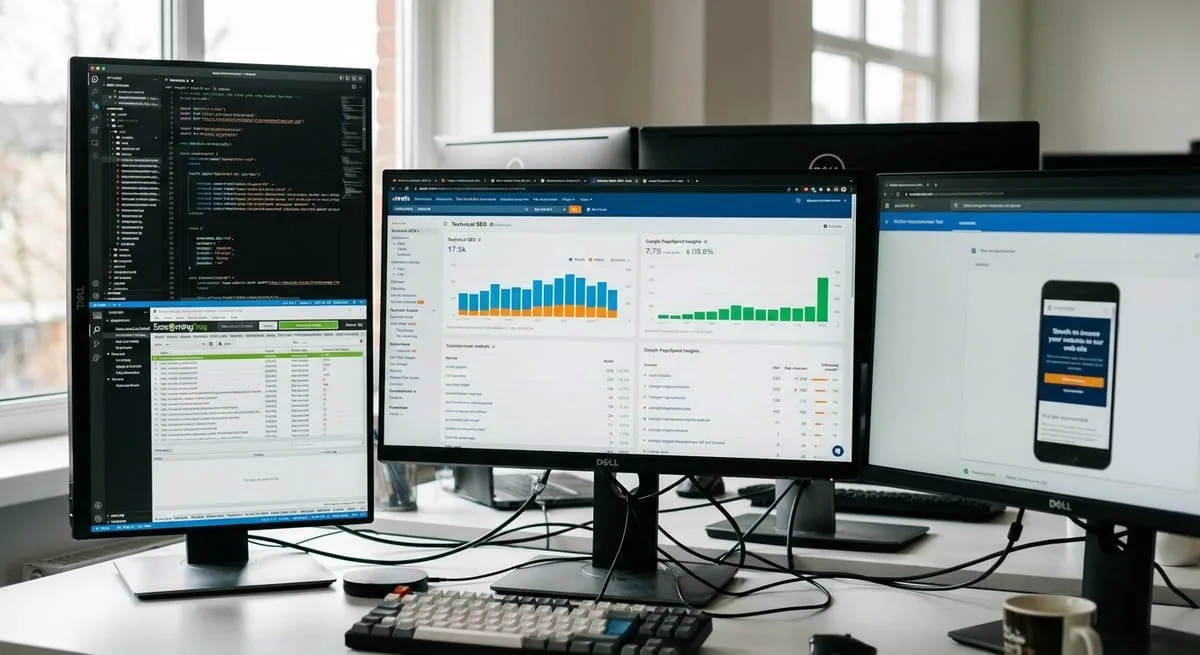
Here's what you're paying for when you hire an agency. These specific deliverables should appear in any legitimate proposal.
Your site might look perfect to visitors, but Google sees the code underneath. Technical audits identify invisible problems blocking your rankings: site speed issues, mobile responsiveness failures, crawl errors preventing Google from indexing your pages, and missing structured data that could trigger rich snippets in search results.
Professional technical SEO audits examine your site architecture to ensure efficient crawling, analyze XML sitemaps and robots.txt files for indexation issues, identify and fix duplicate content problems, review HTTPS implementation, and test page speed across desktop and mobile devices.
Business outcome: This fixes the foundation so Google can properly find, understand, and rank your site. Without technical SEO optimization, all other efforts are building on quicksand.
Professional agencies analyze what your customers actually search for, map search intent to your offerings, identify competitive gaps where you can win, and prioritize keywords by business value, not just search volume.
Effective research evaluates search volume trends, analyzes keyword difficulty scores against your site's current authority, maps keywords to buyer journey stages (awareness, consideration, decision), identifies question-based searches indicating research behavior, and discovers long-tail variations that competitors overlook.
The research reveals not just what people search, but why. Someone searching "best accounting software" is in research mode. Someone searching "QuickBooks vs Xero for small business" is comparing options. Someone searching "QuickBooks pricing" is ready to buy.
Business outcome: You'll know exactly which pages to create or optimize to capture your target audience at every stage of their buying journey.
Every page on your site should work harder. Agencies optimize meta titles and descriptions to improve click-through rates, restructure content with proper headers and internal linking, ensure URLs are clean and keyword-rich, and create SEO-optimized blog content and service pages that rank and convert.
On-page optimization includes strategic keyword placement in titles, headers, and first 100 words, optimizing image alt text, creating benefit-focused meta descriptions under 160 characters, structuring content with clear H2/H3 hierarchy, and adding internal links using relevant anchor text to strengthen topical authority.
Business outcome: Your existing pages become more visible and persuasive. New content gets found faster and ranks higher because it's built right from day one.
Google still views links from other websites as votes of confidence. Professional agencies use white-hat strategies: digital PR outreach to industry publications, content partnerships that earn natural links, strategic guest posting on authoritative sites, and relationship building with relevant websites.
Quality matters exponentially more than quantity. One link from a domain authority 70+ industry publication carries more weight than fifty directory submissions. Agencies track referring domain quality, anchor text diversity to avoid over-optimization penalties, link placement, and follow vs. nofollow ratio for natural link profiles.
Business outcome: Your site builds credibility in Google's eyes. More importantly, you get referral traffic from high-quality sources that already trust you.
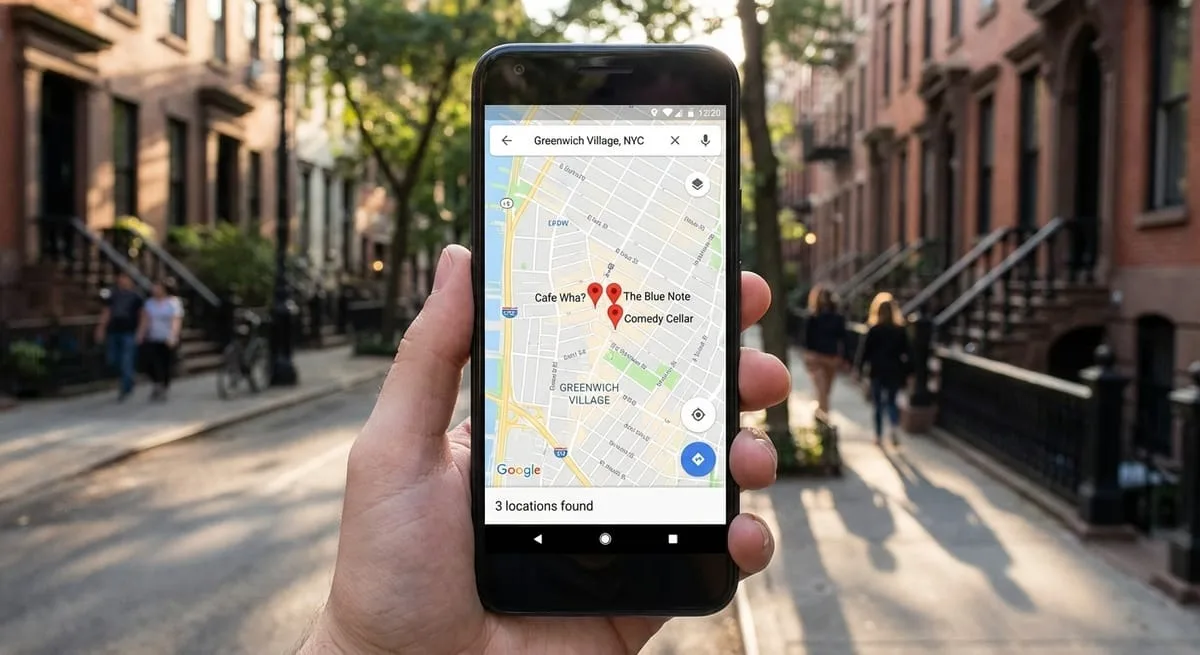
For local businesses, showing up in the Google Map Pack (those three listings with maps) matters more than organic rankings. Searches with local intent trigger map results before standard listings.
Local SEO services include optimizing your Google Business Profile with complete, accurate information, building citations across 50+ directories with consistent NAP (name, address, phone), generating and responding to reviews systematically, creating location-specific landing pages for multi-location businesses, and implementing local business schema markup.
Business outcome: When potential customers search "dentist near me" or "plumber in Tampa," you appear in that valuable local pack, capturing the click before they even scroll to organic results.
Data without insights is noise. Agencies set up proper conversion tracking, create monthly reports focused on business KPIs (not just traffic), analyze what's working and what isn't, and prove ROI by connecting efforts to revenue.
Comprehensive analytics implementation includes configuring Google Analytics 4, setting up goal tracking for form submissions and phone calls, implementing event tracking for specific user actions, creating custom dashboards showing SEO-specific metrics, and establishing baseline metrics for accurate month-over-month comparison.
Professional reporting focuses on metrics that matter: organic traffic segmented by landing page and keyword, conversion rates for organic traffic vs. other channels, keyword ranking improvements for priority search terms, new keywords entering top 10 positions, and estimated traffic value.
Business outcome: You'll know exactly what you're getting for your investment. No more wondering if SEO is actually moving the needle for your business.
Generic advice fails because what works for a local law firm doesn't work for a Shopify store. Here's what effective SEO looks like for different business models.
E-commerce sites face unique challenges: hundreds or thousands of product pages competing for similar keywords, technical issues with faceted navigation and filters, site speed problems with large image catalogs, and constant competition against Amazon and marketplaces.
Specialized e-commerce SEO includes implementing product schema markup so your listings show prices and ratings in search results, optimizing category and collection page architecture to rank for broader terms, fixing duplicate content issues common on e-commerce platforms, and improving site speed for large catalogs.
The strategy prioritizes bottom-of-funnel product pages. When someone searches "waterproof hiking boots size 10," they're ready to buy. Platform-specific optimization captures these high-intent searches through detailed product descriptions with semantic keyword variations, strategic internal linking from collection pages to top-selling products, and image optimization for both Google Images and page speed.
Platform expertise matters. Shopify sites require careful management of duplicate content from collection filters, WooCommerce sites need speed optimization plugins and database cleanup.
What this achieves: Your product pages rank for "[product type] + [modifier]" searches that drive direct sales. A camping gear retailer might rank for "ultralight backpacking tent under 3 pounds" rather than just "backpacking tent," capturing customers ready to buy specific items.
Local service businesses (law firms, medical practices, contractors, real estate agents) need visibility when potential clients search in their service area. The strategy centers on dominating the Google Map Pack for "[service] near me" and "[service] in [city]" searches.
This requires comprehensive citation building across local directories (Yelp, Yellowpages, Bing Places, Apple Maps), strategic review generation and response protocols, service area pages targeting nearby cities and neighborhoods, and local content demonstrating community expertise.
Local content strategy differs from national SEO. Instead of competing for "personal injury lawyer" (dominated by national firms), focus on "car accident lawyer in Coral Springs" or "slip and fall attorney near Sawgrass Mall."
Review generation requires systematic processes. Successful local SEO includes automated review request workflows triggered after service completion, personalized follow-up for high-value clients, monitoring review sites for new feedback, and professional responses to all reviews within 48 hours.
What this achieves: When someone searches "business attorney in Atlanta," you appear in the top three map results. For high-ticket services where a single client generates significant revenue, showing up first locally can be transformational.
Direct-to-consumer brands build their initial audience through Instagram, TikTok, or Facebook ads, then face unsustainable customer acquisition costs as platforms become more expensive. SEO provides the sustainable organic channel to complement paid social.
The strategy focuses on building content that targets bottom-of-funnel and mid-funnel searches, creating buying guides and comparison content that captures purchase-intent keywords, optimizing for branded searches to protect brand equity, and developing lifestyle and educational content that ranks while supporting social content themes.
Content strategy includes comprehensive buying guides targeting "[product category] buying guide" searches, comparison content for "[your product] vs [competitor]" queries, ingredient or material education pages, and lifestyle content aligned with brand values.
What this achieves: You can reduce customer acquisition costs while growing overall revenue by adding organic search as a channel. Buying guides like "best cruelty-free moisturizer for sensitive skin" drive consistent sales without ongoing ad spend.

Pricing varies based on your business size, competition level, and current website state, but there are standard ranges.
Business Type | Monthly Investment | What's Included |
Small local business (10-20 pages) | Entry-level package | Local optimization, 2-4 pages monthly, citation building, review management, monthly reporting |
Growing e-commerce (50-200 products) | Mid-tier package | Technical audits quarterly, 6-10 page optimizations monthly, buying guides, link acquisition |
Established business (significant revenue) | Enterprise package | Enterprise technical work, 10+ content pieces monthly, aggressive link campaigns, executive reporting |
Several factors affect where you'll land in these ranges:
Industry competition matters enormously. Ranking for "personal injury lawyer" requires more resources than "industrial equipment supplier" because competition levels differ dramatically.
Your current website state affects initial investment. A modern site needing optimization costs less than a 2012-era site requiring rebuilding.
Geographic scope impacts pricing. Local costs less than national campaigns, and national costs less than international with multiple languages.
Red flags to avoid: Exceptionally low monthly rates, requiring 12-month upfront payments without clear performance milestones, "pay for performance" models that only pursue easy wins, guarantees of "page 1 rankings" for competitive keywords, and agencies that won't explain their methods in detail.
For ROI context: unlike paid ads that stop when you stop paying, organic rankings compound. Traffic increases while your monthly investment stays relatively flat.
Here's what separates legitimate agencies from the ones that will waste your money.
Every serious agency should provide transparent case studies with verifiable results: specific traffic increases, revenue growth, or ranking improvements for clients in your industry.
Platform-specific expertise matters if you're on Shopify, WooCommerce, or another platform. Each platform has specific technical quirks.
Find out if they use in-house teams or outsource work. Ask where team members are located and whether you'll communicate directly with them.
Verify their technical capabilities by asking specific questions: How do you handle site migrations? What's your process for implementing schema markup? How do you diagnose and fix site speed issues?
Guaranteed rankings or "page 1 in 30 days" promises are impossible. Google's algorithm considers over 200 factors.
Secret or proprietary strategies they won't explain should raise immediate red flags. Legitimate SEO follows Google's published guidelines.
No client references or case studies means they can't prove results.
Black-hat tactics like link schemes, private blog networks (PBNs), or keyword stuffing will get you penalized.
Use these questions to evaluate any potential partner:
Can you show me three case studies in my industry with specific results? Ask for traffic increases, revenue impact, specific keyword rankings, and timeline to results.
Who will actually work on my account? Get names, roles, and backgrounds.
What tools do you use? Professional agencies use industry-standard tools like Ahrefs, SEMrush, Screaming Frog, and Google Search Console.
How do you handle algorithm updates? Ask about their process for monitoring updates and adjusting strategies.
What's your link-building approach? The answer should involve white-hat strategies: outreach to relevant sites, digital PR, content partnerships, and guest posting.
How often will we communicate about performance? Establish expectations before you're frustrated by silence.
What happens if I don't see results in six months? Professional agencies set realistic expectations and have contingency plans.
Do you have experience with my website platform? Platform expertise prevents costly mistakes.
What's included versus what costs extra? Know exactly what deliverables your monthly fee covers.
You now understand what agencies do, what services should cost, and how to separate legitimate partners from the ones who overpromise and underdeliver.
At Grindstone Design, we specialize in technical SEO and e-commerce optimization for growing businesses. Whether you're running a Shopify store, managing a local service business, or scaling a DTC brand, we'll create a transparent strategy focused on measurable business outcomes.
Get your free SEO audit to see exactly what's holding back your rankings, or schedule a consultation to discuss your specific situation.
How much does an SEO agency cost?
Agency pricing ranges based on business size and needs. Small local businesses with 10-20 pages need entry-level packages covering local optimization and basic citation work. Growing e-commerce sites with 50-200 products require mid-tier packages including technical audits and content creation. Established businesses need enterprise packages with aggressive link campaigns and extensive content production.
How long does it take to see SEO results?
Most businesses see initial improvements in 3-4 months, with significant traffic growth by months 6-12. SEO is a long-term investment. Google needs time to crawl, index, and trust your site.
What's the difference between SEO and Google Ads?
Google Ads delivers instant traffic but stops when you stop paying. SEO builds long-term organic visibility that compounds over time. SEO costs less per lead but requires 3-6 months to show results, while ads work immediately but need continuous investment.
How do I know if an SEO agency is legitimate?
Legitimate agencies show transparent case studies, explain strategies clearly, never guarantee specific rankings, use white-hat tactics, provide client references, and offer month-to-month contracts after initial commitments.
Do I need ongoing SEO services or just one-time optimization?
SEO requires ongoing work. Google's algorithm updates constantly, competitors improve their sites, and your content needs regular updates and expansion. One-time optimization provides a foundation, but maintaining rankings requires continuous effort.
Can I do SEO myself or do I need an agency?
DIY SEO works for simple sites with low competition if you have time to learn technical skills, content creation, and link building. Hire an agency when you have 100+ pages, face competitive markets, encounter technical issues beyond your expertise, or have tried DIY for 6+ months without meaningful results.
Discover more insights from our latest articles


