How Long Does It Take to Build a Website? Real Timelines From an Agency
ByJames Price· Founder & CEO
10 min read
How long does it take to build a website? For a professionally built business site, 2 weeks to 6 months, and the spread depends on scope. A template-based small site takes 2 to 4 weeks. A custom small business site takes 6 to 10 weeks, e-commerce runs 8 to 16 weeks, and custom web applications take 3 to 6 months or more.
You'll notice those numbers disagree with the platforms ranking above us for this search. Wix and Hostinger will tell you a website takes a day, and for a DIY template with your own photos dropped in, that's true. This article covers the other thing, a site an agency researches, designs, writes, and builds to produce leads. Different product, different clock.
We're Grindstone Design, a web design agency in Jacksonville, Florida, and the timelines below come from our own project history across Florida and Georgia. We'll also tell you the real reason projects run late, because it's probably you, and it's fixable.
Here are realistic 2026 timelines for professionally built sites, if the client is responsive and the agency isn't overbooked.
| Project type | Typical timeline | What moves it |
|---|---|---|
| Template-based small site (5-8 pages) | 2 to 4 weeks | Content readiness, photo quality |
| Custom small business site (8-20 pages) | 6 to 10 weeks | Copywriting, revision rounds, integrations |
| E-commerce store | 8 to 16 weeks | Product count, data migration, payment and shipping setup |
| Custom web application | 3 to 6+ months | Feature scope, third-party APIs, testing depth |
Timeline and cost track each other closely, since both are mostly labor hours. If you want the price side of the same table, our guide to how much a website costs uses the same project tiers.
Two cautions on reading these ranges. An agency quoting half the typical time is usually skipping discovery or copywriting, and you'll pay for that at launch when the site says nothing persuasive. An agency quoting double is usually overbooked, and your project will sit in a queue no one mentions.
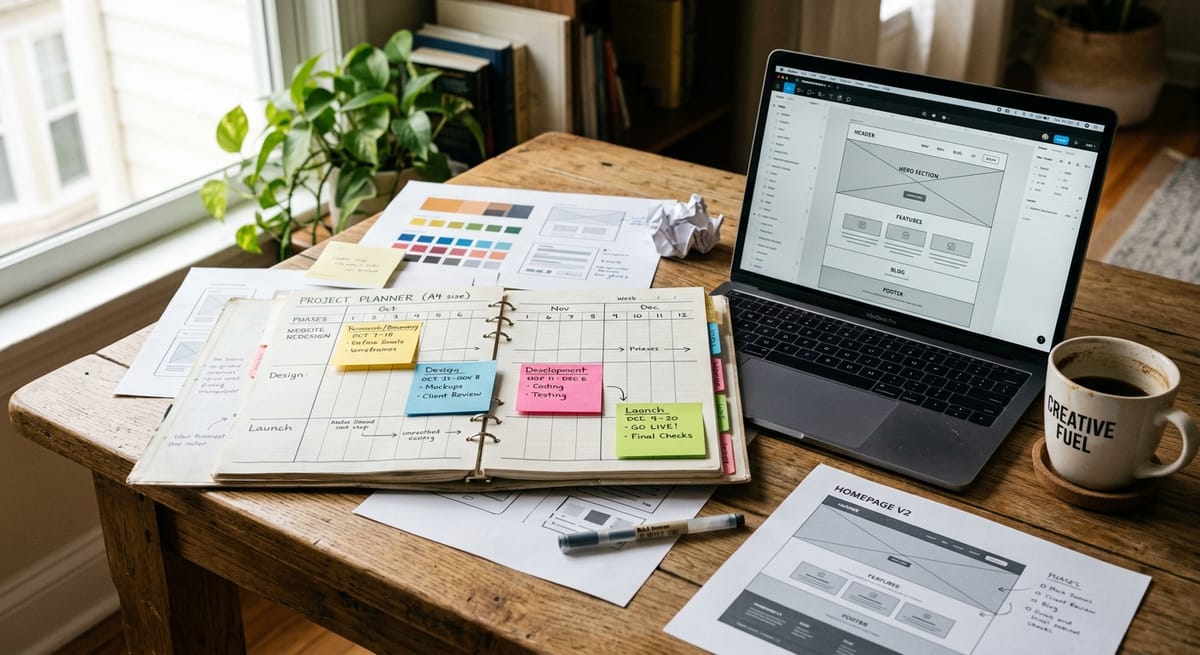
A 6-to-10 week custom site breaks down into six phases, and knowing them helps you spot a project drifting off course.
| Phase | Duration | What's happening |
|---|---|---|
| Discovery and strategy | 1 to 2 weeks | Goals, competitors, sitemap, keyword research |
| Design | 2 to 3 weeks | Homepage concept first, then interior templates, 2 revision rounds |
| Content | 2 to 4 weeks, overlaps design | Copywriting, photography, product data |
| Development | 2 to 4 weeks | The approved designs become a working site |
| QA and testing | 1 to 2 weeks | Browser and device testing, forms, speed, SEO checks |
| Launch | 2 to 4 days | DNS, redirects, analytics, monitoring |
Discovery is the phase owners most want to skip, and it's the one that pays for itself. A week spent mapping which 3 services drive your profit changes what the homepage says, which pages exist, and which keywords the site targets. Skipping it produces a pretty site about the wrong things, and rebuilding messaging after launch costs more than the week did. If your project goes past a standard brochure site and needs custom features or integrations, our software development work is the next step.
The overlap matters too. Good agencies run content alongside design rather than after it, which is where weeks get saved. If you're unsure what pages you even need, our breakdown of what pages a small business website needs is the pre-discovery homework that shortens discovery.
Development time also depends on who's building. A professional website development process includes staging environments, code review, and device testing, which is part of why an agency's 3 weeks beats a rushed 1 week that spends the difference in post-launch bug fixes.
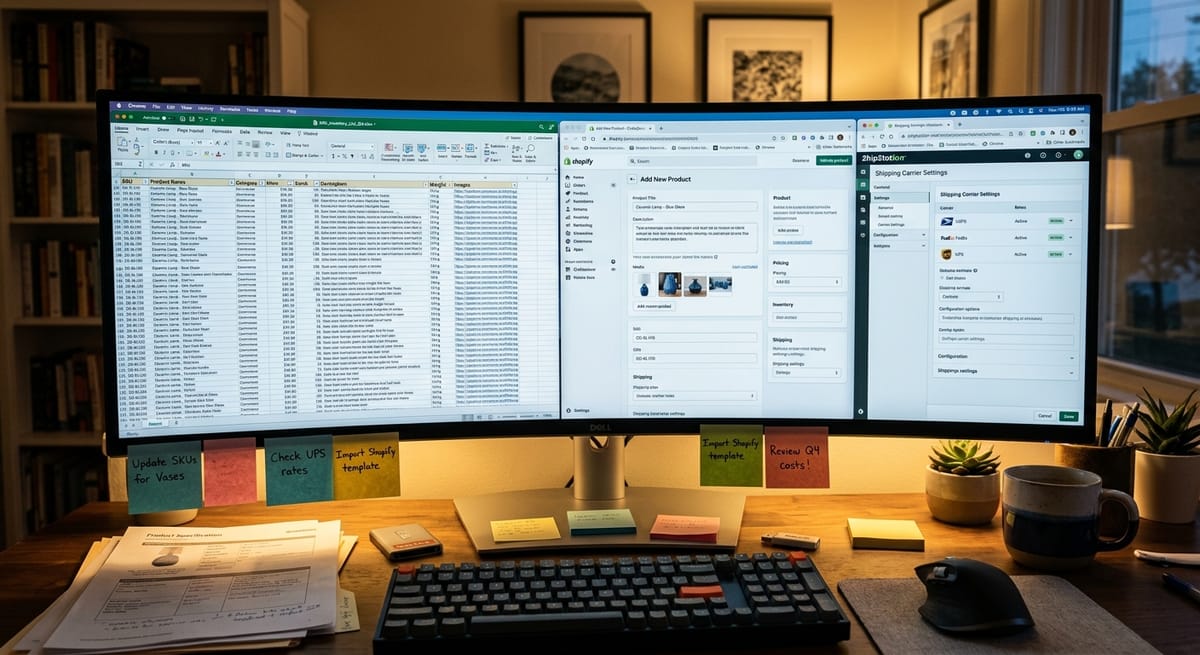
E-commerce runs 8 to 16 weeks because a store carries work a brochure site never touches. Every product needs a title, description, photos, pricing, and inventory data, and at 200 products that's a project inside the project. Payment processing, tax settings, and shipping rules each need setup and real test transactions before launch.
Product data is the piece that blows up timelines. A clean spreadsheet imports in a day. What clients usually have is data spread across an old cart, a point-of-sale system, and someone's memory, and reconciling it takes weeks. Ask any agency what their longest e-commerce project waited on, and the answer is product data, every time.
Scale changes the math again. Our aircraft parts client runs 50,000+ SKUs with a custom RFQ system, which is a multi-month build no matter who does it, and the payoff was a 1,900% increase in leads. A 30-product Shopify store is nothing like that, and 8 to 10 weeks covers it comfortably.
If you're migrating an existing store, add 2 to 4 weeks for URL redirects and testing order flows against real customer accounts. Cutting that step risks both your rankings and your checkout, and those are the only two things an online store has.
Set two different clocks, because two different things are ramping.
Conversion improvements show up immediately. If the old site converted 1% of visitors and the new one converts 2.5%, that change appears in week one, with the traffic you already have. This is why we tell owners the launch date is the finish line for the build and the starting line for the numbers.
Search rankings ramp slower. A new site on a new domain typically takes 4 to 8 months to rank for competitive local terms, while a redesign of an established site can hold or improve its rankings within weeks if the migration is handled properly. Budget your expectations accordingly, and be suspicious of anyone who promises page one by launch day.
Content and feedback from the client. We'll say it kindly, but we'll say it, because knowing this upfront is worth a month of your life. Across our projects, the single largest source of schedule slip is waiting on the client's copy, photos, product details, and design approvals. Agencies talk about this constantly among themselves and almost never print it.
It's understandable. You have a business to run, and "write the About page" loses to a burst pipe or a payroll deadline every single time. A two-day review stretches to two weeks, four times per project, and an 8-week site quietly becomes a 16-week site with no single decision causing it.
The other common delays are smaller but real. Scope additions mid-project add 1 to 3 weeks each. A missing logo file or brand guide adds a week.
Waiting on third-party access, domain logins, payment accounts, ancient hosting credentials, adds another. None of these rival the content bottleneck.
The fix on your side is one decision, assign a single person with authority to approve things within 48 hours. Committees kill timelines. Two stakeholders who disagree about the homepage add more calendar time than any technical problem we've ever hit.
You can vet for this before signing, because on-time agencies run visibly different processes.
Content-first is the big one. We collect or write copy before design starts, since designing around real content beats pouring content into pretty boxes that don't fit it. Agencies that say "just send content whenever" are scheduling a stall.
Structured revisions are second. Two named revision rounds per phase, with feedback consolidated into one list per round. Unlimited revisions sounds generous and produces 14-week homepages. Third is a written schedule with client deadlines on it, your dates in the plan next to theirs, so slippage is visible to everyone the day it happens.
Solo builders deserve a note here. A good freelancer can match agency speed on small sites, but there's no backup when they get sick, land a bigger client, or disappear in week 5. We covered that tradeoff honestly in our web design agency vs freelancer comparison, and timeline risk is the freelancer's biggest hidden cost.
If your current site is the thing stalling you and you're unsure whether to fix or rebuild, our free business audit will tell you which project you're actually scoping, and how long that version takes.
Sometimes, and it costs you in one of two currencies, money or scope.
Rush fees run 20 to 50% at agencies that offer compressed timelines, because your project jumps a queue and other clients' work shifts. The alternative is cutting scope, and that's often the smarter trade. A 5-page template site with strong copy can genuinely launch in 2 to 3 weeks, and for a new business that needs to exist online by opening day, it's the right call. Build the 20-page custom site as phase two.
What you should never compress is QA and redirects. A site that launches a week early with broken forms loses more leads than the week saved. If a deadline is immovable, a wedding venue with booking season, a restaurant opening, tell the agency on day one and let them scope backward from the date.
One honest flag from our side of the table. When a prospect needs a full custom site in 3 weeks, the realistic options are a template build now or a custom build done right, and any agency promising the custom one anyway is planning to skip the parts you can't see.
Five questions separate agencies with real schedules from agencies with hopeful ones.
The second question is the revealing one. Agencies that have thought about client-side delays have an answer ready, usually a pause-and-resequence policy. Agencies that promise the launch date "won't move no matter what" have either padded the quote heavily or plan to launch whatever exists on that date.
Ask the third question with the follow-up that matters, "what happened on your last project that ran late?" Every agency has one. The useful signal is whether they name a specific cause and a process change, or blame the client and move on.
We put a longer vetting list in our guide to questions to ask a web design agency. That list covers ownership, hosting, and support alongside the schedule.
Ready for a real timeline instead of a range? Request a quote with your page count, your content status, and any hard deadline. We'll send back a scoped price and a week-by-week schedule, and if a template build serves you better than a custom one, we'll say that too.
Six to 10 weeks is typical for a custom site of 8 to 20 pages. That window covers discovery, design, copywriting, development, and testing. A template-based site takes 2 to 4 weeks. The biggest variable is how quickly you deliver content and approvals, which affects the schedule more than the agency's build speed does.
They're different products. A DIY builder gives you a template to fill in yourself, which really can be done in a day. An agency project includes competitor research, custom design, professional copywriting, SEO structure, and testing across devices. You're paying for a site engineered to produce leads, and that work is the timeline.
Yes, if the scope fits the clock. A 5-to-8 page template site with finished copy and photos can launch in 2 to 3 weeks. A custom design cannot, and an agency that promises one that fast is cutting discovery, copywriting, or QA. For hard deadlines, launch a lean version fast and expand it in phase two.
Content, in most real projects. Design and development phases have fixed durations, but copy, photos, and product data depend on the client, and they routinely double the calendar. Projects where the agency writes the copy, or where content is finished before design starts, run 3 to 6 weeks faster than content-last projects.
Three moves save the most time. Appoint one decision-maker who can approve work within 48 hours, have your logo files, photos, and login credentials gathered before kickoff, and pay the agency to write the copy instead of promising to write it yourself. Those three routinely turn a 14-week slog into a 9-week project.
Discover more insights from our latest articles


