Custom Website vs Wix and Squarespace
ByJames Price· Founder & CEO
11 min read
Here's something you won't hear from most web design agencies. Plenty of businesses should skip us entirely and build on Squarespace. The custom website vs Wix debate gets argued in bad faith by people selling one side, so this post lays out who belongs on a builder, who doesn't, and the real 3-year numbers behind the choice. If you want cleaner reporting on which pages and actions actually matter, our guide to GA4 custom definitions covers the setup.
I'm James Price, founder of Grindstone Design, a web design and SEO agency in Jacksonville, Florida. We build custom sites for a living, and we still send a few prospects a year to Squarespace because taking their money would have been wrong. The dividing line is clearer than either side admits, and it mostly comes down to budget and how much your revenue depends on the site. For a real-world example of a site that went from a static brochure to an ecommerce sales channel, see our Rex Golf Shop website redesign case study.
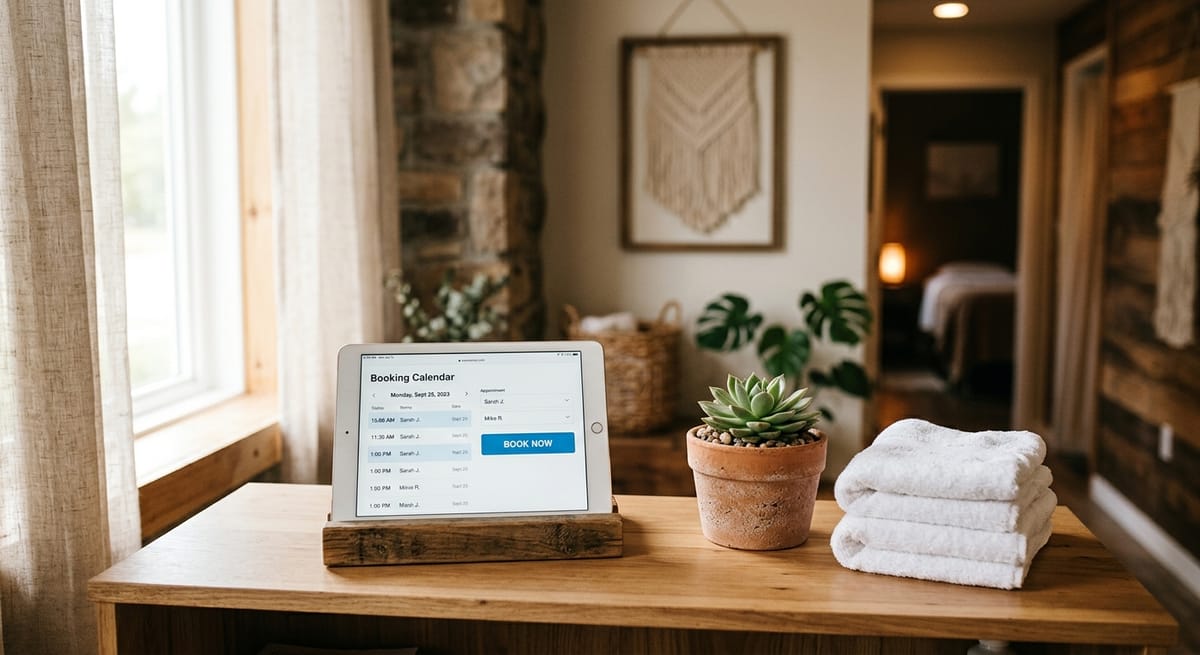
Four kinds of businesses should use a builder, and if you're one of them, close this tab and go sign up. First, anyone with a total budget under $2,000. A builder plus your own effort beats every $800 freelancer on the market, and we've said the same thing in our guide to how much a website costs in 2026.
Second, solo service providers whose work comes from referrals and repeat clients. A massage therapist or a freelance photographer needs a clean page that confirms they're real, shows the work, and takes bookings. Squarespace does that job well for $23 a month. If you're building that kind of simple site, our guide to web accessibility in 2024 covers the basics that make it easier for everyone to use.
Third, anyone validating a new idea. If the business might pivot or die within a year, spending $8,000 on a site is malpractice. Launch on Wix in a weekend, see if anyone buys, and invest after the idea proves out.
Fourth, businesses where the website is genuinely a formality, like a landlord's LLC or a wholesale operation with 5 accounts it's had for a decade. If a stranger finding you on Google has never once produced revenue, a builder is plenty.
The pattern behind all four is the same. Builders fit when the site confirms your existence. The calculation flips when the site has to go win strangers.
One honest note on the other side of the line. Contractors, medical practices, and restaurants in competitive metros rarely stay in the builder column for long, because their buyers start as Google searches. If 30 strangers a month typing "deck builder Orlando" decide your revenue, the platform question is really a rankings question. If you do move past a builder, our guide to how long it takes to build a website breaks down the real timelines for custom sites, e-commerce stores, and bigger web apps.
The sticker prices lie in both directions. Wix looks nearly free and isn't, and custom looks expensive without the earning side attached. Here's the honest side-by-side for a small service business.
| Factor | Wix / Squarespace | Custom (agency-built) |
|---|---|---|
| Cost over 3 years | $1,100 to $3,500 in plans and apps, plus 40 to 80 hours of your time | $6,000 to $18,000 build plus $30 to $100 monthly upkeep |
| Time to launch | Days to 2 weeks | 6 to 10 weeks |
| SEO ceiling | Fine for light local competition, limited technical control after that | No ceiling, full control of structure, speed, and schema |
| Site speed | Adequate, drops as apps stack | Tunable, 1 to 2 second loads are a design target |
| Ownership and portability | You rent, templates and content don't export cleanly | You own the files, code, and content outright |
| Conversion optimization | Template layouts, limited testing tools | Pages built around your funnel, full testing and tracking |
Read the first row carefully, because your time is the hidden number. Sixty hours of an owner's time at even $50 an hour is $3,000 of build cost that never shows on an invoice. Builders are cheap in cash and expensive in evenings.
The last row is where custom earns its price for lead-dependent businesses. A site that converts 3% of visitors instead of 1% triples your leads with zero extra traffic, and that's design work builders don't really allow. We wrote about what separates converting sites from pretty ones in what makes a good small business website.
Run one worked example to see how the rows interact. A pressure washing company gets 600 visits a month, average job $350. On a template converting at 1%, that's 6 leads and maybe $1,050 in monthly revenue from the site. On a custom build converting at 3%, it's 18 leads and roughly $3,150, so the $9,000 difference in build cost returns itself in about 4 months.
Now run the same math for a portrait photographer booked solid through referrals. Extra site conversions can't add capacity, so the custom premium buys nothing. The spreadsheet is the answer, and it gives a different answer for different businesses.
If the builder route is yours, the honest answer is that the choice matters less than the execution, but they do differ. Squarespace ships stricter templates that are hard to make ugly, which is exactly what most non-designers need. Its plans run $16 to $99 monthly, and its e-commerce is fine for small catalogs.
Wix allows more layout freedom and has a bigger app market, which cuts both ways. Owners with design sense get more control, and everyone else gets more rope. Wix pages also tend to carry more script weight, so watch your mobile speed as you add features.
For service businesses that mostly need pages, bookings, and a blog, we point people to Squarespace. For anyone needing an odd layout or a niche app integration, Wix. If you're selling more than about 50 products, skip both and look at Shopify, which is a genuine commerce platform rather than a site builder with a cart.
Whichever you pick, buy the annual plan after the trial, connect your own domain, and set up email at your domain name. Invoices from gmail addresses cost real credibility with commercial clients.
The $16 monthly plan on the billboard is a teaser rate. By the time a Wix site does what a business actually needs, the plan is $36 or more, and the add-ons have started stacking.
Apps are the first surprise. Reviews widget, $8 a month. Pop-up tool, $10. Booking upgrade, $15. A functional business site on Wix commonly runs $60 to $120 monthly once the app bill lands, which is $2,200 to $4,300 over three years.
Transaction fees hit sellers on top of that. Squarespace takes a cut of every sale on its lower commerce plans, and Wix's cheaper tiers carry their own payment restrictions. On $5,000 a month in sales, a 2% platform fee is $1,200 a year that a custom WooCommerce store never pays. Small percentages on recurring revenue are how "cheap" platforms get paid properly.
Template sameness is the quieter cost. Your site shares its skeleton with a few hundred thousand others, and buyers notice the pattern even if they can't name it. In a market where 4 competing roofers all bought the same template family, nobody differentiates and everybody competes on price.
The expensive one is migration pain later. Builder content doesn't export cleanly, so when you outgrow the platform, you rebuild from scratch and redirect what you can. We've done plenty of these rescues, and the rebuild costs the same as if the builder years never happened. The builder wasn't wasted money, but nothing carried over except lessons.
Speed decay belongs on the list too. Every app you add loads its own scripts, and a Wix site with 12 apps can take 5+ seconds on a phone. If that's your current situation, our piece on why websites load slowly explains which weight can be cut and which is baked into the platform.
If you go the builder route, do it properly, because most builder sites fail from neglect rather than platform limits. The gap between a lazy Squarespace site and a well-run one is enormous.
Measurement is the big one, and the platforms support it better than people think. You can run Google Analytics 4, conversion tracking, and remarketing tags on Squarespace through Google Tag Manager, and we published a full walkthrough on installing Google Tag Manager on Squarespace. Very few of the builder sites we audit have working conversion tracking. Be one of the ones that does and you'll make better decisions than most of your competitors.
Copy is the second lever. Templates ship with placeholder rhythm, and most owners keep that rhythm with their own nouns swapped in. Write like you talk to customers, name your prices where you can, and answer the 10 questions every prospect asks on the phone. Good copy on a template beats weak copy on a $15,000 build.
Then handle the basics that don't care what platform you're on. Real photos of your team and work, a Google Business Profile you actually maintain, reviews collected weekly, and one page per service instead of one crowded "Services" page. None of this requires an agency. It requires Tuesday nights for a month. If you want to add paid traffic once the site is in shape, our PPC management page covers how we handle search ads for lead-focused businesses.
If you'd like a second set of eyes on what you've built, our free business audit covers builder sites too, and we'll tell you honestly whether to keep improving it or start planning a move.
There's a recognizable moment when the builder becomes the bottleneck, and it usually arrives between year two and year four of real growth. The signals are specific.
The clearest one is SEO ambition meeting platform limits. When you need 15 service pages, 8 location pages, proper schema markup, and technical control over how Google crawls the site, builders start fighting you. Businesses chasing rankings in competitive metros like Jacksonville, Tampa, or Atlanta hit this wall hard.
Lead volume is the second signal. When the site produces 30% or more of your revenue, a 1% conversion rate versus 3% is no longer academic. At 1,000 visits a month and $2,000 average jobs, that gap is worth roughly $40,000 a month, and template layouts leave you no way to close it.
Workflow needs are the third. Customer portals, quote calculators, inventory sync, CRM automation that goes beyond a Zapier thread. Each of these is either impossible on a builder or held together with $30-a-month duct tape.
A useful test question. Have you said "the website can't do that" about a revenue idea twice in the last six months? Twice is a trend, and the third occurrence will cost more than the rebuild.
Time the move around your slow season, since a rebuild takes 6 to 10 weeks and you'll want attention to spare for content and review. And keep the builder site live until the new one launches with redirects in place. The worst version of outgrowing a platform is a two-month gap where Google finds nothing at your domain.
Custom design gets sold with vague words like "unique" and "professional," so here's the concrete version of what the money buys when it's spent well.
It buys pages engineered around your specific buyer. When we rebuilt La Nopalera's site, a Jacksonville Mexican restaurant, the design centered on online ordering, and orders rose 340% with about $45K in added monthly revenue. A template can't make that bet because a template doesn't know your business model.
It buys technical control with no landlord. Your hosting, your code, your export path, and page speed as an engineering choice rather than a platform outcome. It also buys accountability, since an agency contract has deliverables and a phone number attached when something breaks.
What it doesn't buy is automatic results. A custom site with weak copy and no traffic plan loses to a well-run Squarespace site every time, and plenty of agencies happily sell the losing version. The build is the vehicle, and strategy is the fuel. You can see how we approach the strategy side on our custom web design services page.
So the honest close is the same test we opened with. If your site exists to confirm you're real, use a builder and pocket the difference. If it exists to win strangers and feed a pipeline, the custom math wins by year two. When you're ready to price the second path, request a quote from Grindstone Design and we'll scope it in writing, and if a builder is still your right answer, we'll say exactly that.
For solo operators, referral-driven businesses, and anyone with a budget under $2,000, yes. Squarespace at $23 a month with real photos and specific copy is a respectable web presence. The platforms fall short when you need aggressive local SEO, high-volume lead generation, or custom functionality like portals and calculators.
Over three years, a Wix site typically runs $1,100 to $3,500 in cash plus 40 to 80 hours of your labor. A custom agency build runs $6,000 to $18,000 plus modest hosting. The custom route costs roughly 3 to 5 times more in cash and pays off through higher conversion rates and a bigger SEO ceiling.
Yes, especially in light local competition. Builders handle the basics, titles, mobile layouts, and sitemaps well enough. The ceiling shows up in competitive markets where technical control, site speed, and large page architectures decide rankings. A Squarespace site can win "pottery classes Savannah" and will struggle for "roof replacement Tampa."
Sort of, and it's the weakest part of the builder bargain. Text and images can be copied out, but designs, apps, and structures don't transfer, so a move is a rebuild with redirects. Budget for a full new build when you outgrow the platform, and treat the builder years as a paid trial run of your business model.
In cash, slightly. A custom WordPress site needs hosting at $10 to $50 monthly plus updates, either $50 to $150 monthly for managed maintenance or a few hours of your own. Wix bundles maintenance into its plan, which is genuinely convenient. Builders win on upkeep simplicity, and custom wins on everything the upkeep protects.
Discover more insights from our latest articles


